|
1950-1978 ☆
1978-1988 ☆
1988-1999 ☆
1999-20??
 |
1950-1978
 In 1950 Taito started operations in Japan, under the name Taito Trading Company it found success
through importing vending and perfume machines. It became the first company to domestically brew and
sell vodka in Japan but later shifted focus to importing jukeboxes and providing equipment for
amusement arcades around 1956. Starting 1960 Taito would open it's own amusement centres, running a
large one with the first domestically produced crane games, over 40 shooting games and pinball tables in Osaka. This kicked off a rivalry between
Taito and David Rosen, who would end up founding Sega in 1965. Taito developed their own
electro-mechanial games starting in 1967 with "Basketball", "Periscope", and "Crown Soccer Special".
By the late 1960s Sega and Taito were the largest Japanese arcade manufacturers. "Crown Basketball",
"Royal Crown" and "Thunder-Bird" released in 1968, by this year Tomohiro Nishikado joined Taito.
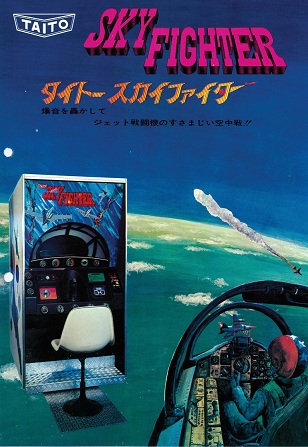
Nishikado would develop the electro-mechanial games "Sky Fighter" and "Sky Fighter II" in 1971. Soon
after, he studied Pong's arcade unit and how it worked, this lead to Taito's first video games
"Elepong", "Davis Cup" and "Soccer" being released in 1973. "TV Basketball" released in 1974, the
first game to use character sprites rather than simple shapes, in November of the same year
"Speed Race" built on the same idea (along with taking inspiration from the earlier
electro-mechanial game "Super Road 7") and introduced scrolling graphics along with being a pioneer
of the racing genre as a whole. Taito developed "400 Miles", "Dead
Heat", "Speed Race DX", "Western Gun", "Attack", "Crashing Race", "Interceptor", "Speed Race
Twin", "Barricade II", "Fisco 400", "Cross Fire", "Flying Fortress II", "Gun Man", "Missile-X",
"Safari", "Soccer DX", "Sub Hunter", "Super High-Way ", "Block", "Super Speed Race", "Acrobat TV",
and "Road Champion" through 1975-1978 along with publishing many more.
In 1950 Taito started operations in Japan, under the name Taito Trading Company it found success
through importing vending and perfume machines. It became the first company to domestically brew and
sell vodka in Japan but later shifted focus to importing jukeboxes and providing equipment for
amusement arcades around 1956. Starting 1960 Taito would open it's own amusement centres, running a
large one with the first domestically produced crane games, over 40 shooting games and pinball tables in Osaka. This kicked off a rivalry between
Taito and David Rosen, who would end up founding Sega in 1965. Taito developed their own
electro-mechanial games starting in 1967 with "Basketball", "Periscope", and "Crown Soccer Special".
By the late 1960s Sega and Taito were the largest Japanese arcade manufacturers. "Crown Basketball",
"Royal Crown" and "Thunder-Bird" released in 1968, by this year Tomohiro Nishikado joined Taito.
Nishikado would develop the electro-mechanial games "Sky Fighter" and "Sky Fighter II" in 1971. Soon
after, he studied Pong's arcade unit and how it worked, this lead to Taito's first video games
"Elepong", "Davis Cup" and "Soccer" being released in 1973. "TV Basketball" released in 1974, the
first game to use character sprites rather than simple shapes, in November of the same year
"Speed Race" built on the same idea (along with taking inspiration from the earlier
electro-mechanial game "Super Road 7") and introduced scrolling graphics along with being a pioneer
of the racing genre as a whole. Taito developed "400 Miles", "Dead
Heat", "Speed Race DX", "Western Gun", "Attack", "Crashing Race", "Interceptor", "Speed Race
Twin", "Barricade II", "Fisco 400", "Cross Fire", "Flying Fortress II", "Gun Man", "Missile-X",
"Safari", "Soccer DX", "Sub Hunter", "Super High-Way ", "Block", "Super Speed Race", "Acrobat TV",
and "Road Champion" through 1975-1978 along with publishing many more.
Outside Links
|
|
|
1978-1988
 By 1978 Taito made their breakthrough with "Space Invaders", becoming the arcade industry's greatest
seller. Akio Nakanishi became the company president in 1984 after the death of the founder, Michael Kogan.
In 1985 Taito made their last electro-mechanical game, "Entertainer Robot", began handling karaoke
equipment and Yasuji Suehiro took the place of president. Their next biggest hits for the timeframe would
be "Bubble Bobble", "Darius" and "Arkanoid", all released in 1986 and receiving many sequels.
Between 1978 and 1988 Taito also developed "Super Block", "Super Speed
Race V", "Super Speed Race CL5", "Top Bowler", "Trampoline", "Wall Block", "Ball Park II", "Field Goal",
"Lunar Rescue", "Galaxy Wars", "Space Chaser", "Space Invaders Part II", "Straight Flush", "ZunZun
Block", "Astro Zone", "Balloon Bomber", "Crazy Balloon", "Galaxy Express 999", "Space Laser", "Lupin the
3rd", "Polaris", "Phoenix", "Safari Rally", "Sea Hunter", "Space Cyclone", "Space Laser", "Super Speed
Race GP-V", "Steel Worker", "Tri-Attacker", "Western Gun Part II", "Colony 7", " Frog & Spiders", "Grand
Champion", "Marine Date", "Rock Climber" "Fitter", "Space Cruiser", "Space Dungeon", "Space Seeker",
"Alpine Ski", "Birdie King", "Electric Yo-Yo", "Front Line", "Jolly Jogger", "Jungle Hunt", "Kram",
"Port Man", "Strike Bowling", "Super Mouse", "Time Tunnel", "Wild Western", "Zoo Keeper", "Trans-America
Ultra Quiz", "Bio-Attack", "Birdie King 2", "Chack'n Pop", "Change Lanes", "Elevator Action", "High Way
Race", "Intrepid", "Joshi Volleyball", "Laser Grand Prix", "Spy Agent", "Super Rider", "Tin Star",
"Water Ski",
By 1978 Taito made their breakthrough with "Space Invaders", becoming the arcade industry's greatest
seller. Akio Nakanishi became the company president in 1984 after the death of the founder, Michael Kogan.
In 1985 Taito made their last electro-mechanical game, "Entertainer Robot", began handling karaoke
equipment and Yasuji Suehiro took the place of president. Their next biggest hits for the timeframe would
be "Bubble Bobble", "Darius" and "Arkanoid", all released in 1986 and receiving many sequels.
Between 1978 and 1988 Taito also developed "Super Block", "Super Speed
Race V", "Super Speed Race CL5", "Top Bowler", "Trampoline", "Wall Block", "Ball Park II", "Field Goal",
"Lunar Rescue", "Galaxy Wars", "Space Chaser", "Space Invaders Part II", "Straight Flush", "ZunZun
Block", "Astro Zone", "Balloon Bomber", "Crazy Balloon", "Galaxy Express 999", "Space Laser", "Lupin the
3rd", "Polaris", "Phoenix", "Safari Rally", "Sea Hunter", "Space Cyclone", "Space Laser", "Super Speed
Race GP-V", "Steel Worker", "Tri-Attacker", "Western Gun Part II", "Colony 7", " Frog & Spiders", "Grand
Champion", "Marine Date", "Rock Climber" "Fitter", "Space Cruiser", "Space Dungeon", "Space Seeker",
"Alpine Ski", "Birdie King", "Electric Yo-Yo", "Front Line", "Jolly Jogger", "Jungle Hunt", "Kram",
"Port Man", "Strike Bowling", "Super Mouse", "Time Tunnel", "Wild Western", "Zoo Keeper", "Trans-America
Ultra Quiz", "Bio-Attack", "Birdie King 2", "Chack'n Pop", "Change Lanes", "Elevator Action", "High Way
Race", "Intrepid", "Joshi Volleyball", "Laser Grand Prix", "Spy Agent", "Super Rider", "Tin Star",
"Water Ski", 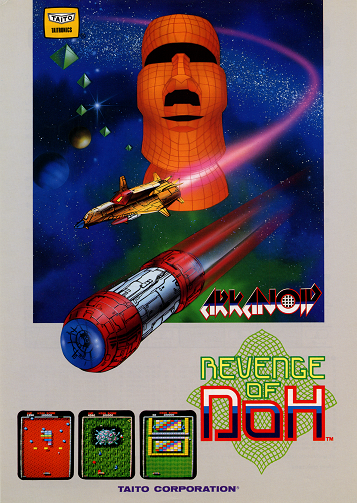 "Ben Bero
Beh", "Birdie King 3", "Buggy Challenge", "Choro Q", "Complex X", "Cosmopolis", "Cycle Mahbou", "Field
Day", "Fire Battle", "Forty-Love", "Golgo 13", "Jan Friend", "Legend of Kage", "Ninja Hayate", "Outer
Zone", "Pit & Run", "Ring Fighter", "Rumba Lumber", "Seafly", "Sea Fighter Poseidon", "Sweet Acorn",
"Victorious Nine", "Fairyland Story", "Go Go Mr. Yamaguchi", "Lady Master", "Metal Soldier Isaac II",
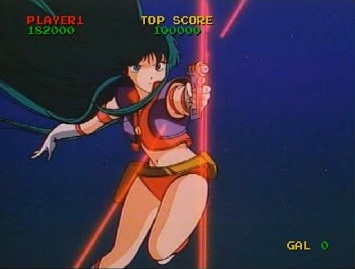
"N.Y. Captor", "Typhoon Gal", "Ping Pong King", "Return of the Invaders", "Samurai Nipponichi", "Sandlot
Baseball", "Sky Destroyer", "Space Battleship Yamato", "Super Dead Heat", "Super Speed Race Jr.", "Time
Gal", "Wyvern F-0", "Big Event Golf", "Cycle Shooting", "Daikaijū no Gyakushū", "Inspiration Baseball",
"Kick and Run", "KiKi KaiKai", "Land Sea Air Squad", ""Lost Castle in Darkmist", "Musashi no Ken",
"Prebillian", "S.R.D. Mission", "Super Bubble Bobble", "Tokio", "Arkanoid: Revenge of Doh", "Continental
Circus", "Darius Extra Version", "Extermination", "Exzisus", "Full Throttle", "Midnight Landing",
"Minelvaton Saga", "Operation Wolf", "Plump Pop", "Rainbow Islands", "Rastan", "Victorious Nine II",
"Akira", "Bonze Adventure", "Chase H.Q.", "Cloud Master", "Enforce", "Fighting Hawk", "Final Blow", "Go
for the Gold", "Kuri Kinton", "Nastar Warrior", "New Zealand Story", "Ninja Warriors" and "Operation
Thunderbolt", "Raimais", "Rainbow Islands Extra", "Superman", "Syvalion", "Top Landing" and "Truxton".
(*Again this list only includes what they developed rather than published or unreleased games, unlike
any other list I've seen) "Ben Bero
Beh", "Birdie King 3", "Buggy Challenge", "Choro Q", "Complex X", "Cosmopolis", "Cycle Mahbou", "Field
Day", "Fire Battle", "Forty-Love", "Golgo 13", "Jan Friend", "Legend of Kage", "Ninja Hayate", "Outer
Zone", "Pit & Run", "Ring Fighter", "Rumba Lumber", "Seafly", "Sea Fighter Poseidon", "Sweet Acorn",
"Victorious Nine", "Fairyland Story", "Go Go Mr. Yamaguchi", "Lady Master", "Metal Soldier Isaac II",
"N.Y. Captor", "Typhoon Gal", "Ping Pong King", "Return of the Invaders", "Samurai Nipponichi", "Sandlot
Baseball", "Sky Destroyer", "Space Battleship Yamato", "Super Dead Heat", "Super Speed Race Jr.", "Time
Gal", "Wyvern F-0", "Big Event Golf", "Cycle Shooting", "Daikaijū no Gyakushū", "Inspiration Baseball",
"Kick and Run", "KiKi KaiKai", "Land Sea Air Squad", ""Lost Castle in Darkmist", "Musashi no Ken",
"Prebillian", "S.R.D. Mission", "Super Bubble Bobble", "Tokio", "Arkanoid: Revenge of Doh", "Continental
Circus", "Darius Extra Version", "Extermination", "Exzisus", "Full Throttle", "Midnight Landing",
"Minelvaton Saga", "Operation Wolf", "Plump Pop", "Rainbow Islands", "Rastan", "Victorious Nine II",
"Akira", "Bonze Adventure", "Chase H.Q.", "Cloud Master", "Enforce", "Fighting Hawk", "Final Blow", "Go
for the Gold", "Kuri Kinton", "Nastar Warrior", "New Zealand Story", "Ninja Warriors" and "Operation
Thunderbolt", "Raimais", "Rainbow Islands Extra", "Superman", "Syvalion", "Top Landing" and "Truxton".
(*Again this list only includes what they developed rather than published or unreleased games, unlike
any other list I've seen)
Outside Links
Series-Specific Pages
|
|
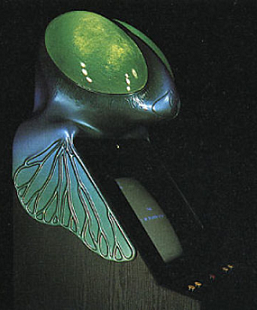
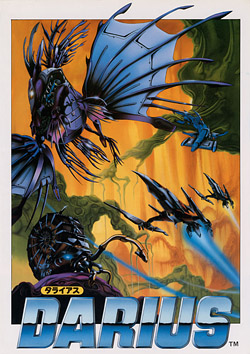
Click the images for more external links and information.
|
1988-1999
 The role of president was changed again to Keisuke Hasegawa in 1988, and Kazuo Inamori took the role of
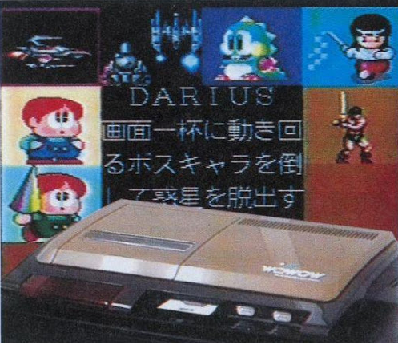
the company's chairman in 1990. Taito announced a CD-ROM console named "WoWoW" in 1992 which would
download games via satellite transmission and play Taito's arcade titles, it was never released but the
idea lived on; The same year Taito would sell "X-2000" karaoke machines with a built-in modem to download
songs directly to the system. Songs would be uploaded onto the service soon after their release and each
song would have visuals and captions accompanying it, by 1996 nearly 12,000 songs were featured on the
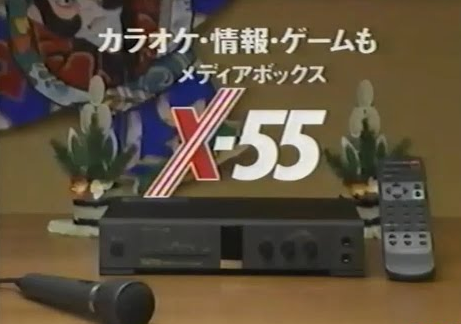
service. In October 1995 they released the "X-55" which had the same functions as X-2000 along with being
able to download games and news through Taito's X Data-Net service. Taito revised the system by the
release of the new Taito Mediabox M-88 system in 1996, using the same X Data-Net service but providing
faster download times and a lower prices. During this era, Taito's primary rivalry was with Capcom, because of this they placed more focus on fighting games and arcade ports than before.
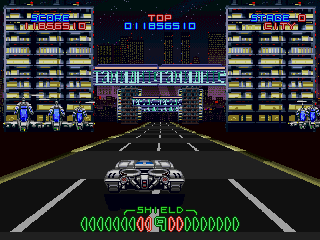
At this time, they also took their first steps with 3D and pseudo-3D, this can be seen even in their cancelled titles such as "City Diver" and "Cyber Sterra".
In 1997 Taito released the first "Densha de GO" game, it was an
instant hit, their biggest since Space Invaders, with many sequels to follow.
Between 1988 and 1999 Taito also produced "Asuka & Asuka", "Bakusho!!
Jinsei Gekijou", "Bari Bari Densetsu", "Cadash", "Cameltry", "Champion Wrestler", "Crime City", "Darius
II", "Don Doko Don", "Master of Weapon", "Maze of Flott", "Megablast", "Night Striker", "Parent Jack",
"Plotting", "Puzznic", "Rambo III", "S.C.I.", "Taito Grand Prix", "Violence Fight", "WGP Real Race
Feeling", "Yukiwo", "Oh Glory Koshien", "Air Inferno", "American Horseshoes", "Aqua Jack", "Darius
Alpha", "Derby Queen", "Dynamite League", "Growl", "Gun Frontier", "Honey Pit", "Liquid Kids", "The
Ninja Kids", "Palamedes", "Parasol Stars", "Quiz H.Q.", "Quiz Torimonochou", "Sonic Blast Man", "Space
Gun", "Space Invaders 91", "Ashita no Joe", "ThunderFox", "WGP Real Race Feeling 2", "Wrath of the Black
Manta", "Yes/No Sinri Tokimeki Chart", "Yuuyu no Quiz de GO! GO!", "Darius Twin", "Double Axle", "The
Flintstones: The Rescue of Dino & Hoppy",
"Galactic Storm", "Hit the Ice", "Mahjong Quest", "Metal Black", "Power Blade", "Power Wheels",
"Pu·Li·Ru·La", "Quiz Quest: Hime to Yūsha no Monogatari", "Racing Beat", "Solitary Fighter", "Rastan
Saga III", "Arabian Magic", "Chase H.Q. II", "Command War: Super Special Battle & Wars Game", "Dead
Connection", "Dino Rex", "Don Doko Don 2", "Euro Champ '92", "Ground Effects", "Gun Buster", "Hat Trick
Hero '93", "The Jetsons: Cogswell's Caper!", "Quiz Chikyuu Boueigun", "Theater Life Quiz", "Monkey Mole
Panic", "Power Blade 2", "Riding Fight", "Ring Rage", "Silent Dragon", "Super Chase: Criminal
Termination", "Violence Fight II", "2 Minute Drill", "Animal Land", "Bubble Bobble Part 2", "Cyber
Sterra", "Darius Force", "Dungeon Magic", "Grid Seeker: Project Storm Hammer", "Prime Time Fighter",
"Quiz Crayon Shin-chan", "Rayforce", "Recalhorn*" (*unreleased but a playable prototype has been
dumped), "Ryu Jin", "Super Cup Finals", "Tube-It", "Under Fire", "Bubble Symphony", "Chase Bombers",
"Daibakushou Jinseigekijou: Ooedo Nikki", "Darius Gaiden", "Elevator Action Returns",
"Kaiser Knuckle", "Hat Trick Hero '94", "Puzzle Bobble", "Quiz Theater: 3tsu no Monogatari", "Real
Puncher", "Slap Shot", "Sonic Blast Man II", "Space Invaders DX", "Bubble Memories: The Story of Bubble
Bobble III", "Dangerous Curves", "Dai Bakushou Jinsei Gekijou: Zukkoke Salary Man Hen", "Gekirindan",
"Hat Trick Hero S", "Jupiter Strike", "Lady Stalker: Challenge from the Past",
The role of president was changed again to Keisuke Hasegawa in 1988, and Kazuo Inamori took the role of
the company's chairman in 1990. Taito announced a CD-ROM console named "WoWoW" in 1992 which would
download games via satellite transmission and play Taito's arcade titles, it was never released but the
idea lived on; The same year Taito would sell "X-2000" karaoke machines with a built-in modem to download
songs directly to the system. Songs would be uploaded onto the service soon after their release and each
song would have visuals and captions accompanying it, by 1996 nearly 12,000 songs were featured on the
service. In October 1995 they released the "X-55" which had the same functions as X-2000 along with being
able to download games and news through Taito's X Data-Net service. Taito revised the system by the
release of the new Taito Mediabox M-88 system in 1996, using the same X Data-Net service but providing
faster download times and a lower prices. During this era, Taito's primary rivalry was with Capcom, because of this they placed more focus on fighting games and arcade ports than before.
At this time, they also took their first steps with 3D and pseudo-3D, this can be seen even in their cancelled titles such as "City Diver" and "Cyber Sterra".
In 1997 Taito released the first "Densha de GO" game, it was an
instant hit, their biggest since Space Invaders, with many sequels to follow.
Between 1988 and 1999 Taito also produced "Asuka & Asuka", "Bakusho!!
Jinsei Gekijou", "Bari Bari Densetsu", "Cadash", "Cameltry", "Champion Wrestler", "Crime City", "Darius
II", "Don Doko Don", "Master of Weapon", "Maze of Flott", "Megablast", "Night Striker", "Parent Jack",
"Plotting", "Puzznic", "Rambo III", "S.C.I.", "Taito Grand Prix", "Violence Fight", "WGP Real Race
Feeling", "Yukiwo", "Oh Glory Koshien", "Air Inferno", "American Horseshoes", "Aqua Jack", "Darius
Alpha", "Derby Queen", "Dynamite League", "Growl", "Gun Frontier", "Honey Pit", "Liquid Kids", "The
Ninja Kids", "Palamedes", "Parasol Stars", "Quiz H.Q.", "Quiz Torimonochou", "Sonic Blast Man", "Space
Gun", "Space Invaders 91", "Ashita no Joe", "ThunderFox", "WGP Real Race Feeling 2", "Wrath of the Black
Manta", "Yes/No Sinri Tokimeki Chart", "Yuuyu no Quiz de GO! GO!", "Darius Twin", "Double Axle", "The
Flintstones: The Rescue of Dino & Hoppy",
"Galactic Storm", "Hit the Ice", "Mahjong Quest", "Metal Black", "Power Blade", "Power Wheels",
"Pu·Li·Ru·La", "Quiz Quest: Hime to Yūsha no Monogatari", "Racing Beat", "Solitary Fighter", "Rastan
Saga III", "Arabian Magic", "Chase H.Q. II", "Command War: Super Special Battle & Wars Game", "Dead
Connection", "Dino Rex", "Don Doko Don 2", "Euro Champ '92", "Ground Effects", "Gun Buster", "Hat Trick
Hero '93", "The Jetsons: Cogswell's Caper!", "Quiz Chikyuu Boueigun", "Theater Life Quiz", "Monkey Mole
Panic", "Power Blade 2", "Riding Fight", "Ring Rage", "Silent Dragon", "Super Chase: Criminal
Termination", "Violence Fight II", "2 Minute Drill", "Animal Land", "Bubble Bobble Part 2", "Cyber
Sterra", "Darius Force", "Dungeon Magic", "Grid Seeker: Project Storm Hammer", "Prime Time Fighter",
"Quiz Crayon Shin-chan", "Rayforce", "Recalhorn*" (*unreleased but a playable prototype has been
dumped), "Ryu Jin", "Super Cup Finals", "Tube-It", "Under Fire", "Bubble Symphony", "Chase Bombers",
"Daibakushou Jinseigekijou: Ooedo Nikki", "Darius Gaiden", "Elevator Action Returns",
"Kaiser Knuckle", "Hat Trick Hero '94", "Puzzle Bobble", "Quiz Theater: 3tsu no Monogatari", "Real
Puncher", "Slap Shot", "Sonic Blast Man II", "Space Invaders DX", "Bubble Memories: The Story of Bubble
Bobble III", "Dangerous Curves", "Dai Bakushou Jinsei Gekijou: Zukkoke Salary Man Hen", "Gekirindan",
"Hat Trick Hero S", "Jupiter Strike", "Lady Stalker: Challenge from the Past", 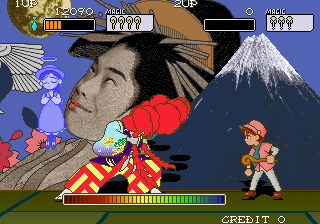 "Landing Gear", "PD
Ultraman Invaders", "Psychic Force", "Puzzle Bobble 2", "Space Invaders '95", "Space Invaders Virtual Collection", "Twin Cobra
II", "Twin Qix*" (*also unreleased aside from a prototype), "Cleopatra Fortune", Fighters' Impact",
"Magical Date", "Psychic Force EX", "Puzzle Bobble 3", "Raystorm", "Side by Side", "Super Football
Champ", "Arkanoid Returns", "Densha de Go! EX", "Fighters' Impact A", "G-Darius", "Kirameki Star Road -
Intro Club", "Magical Date EX", "Pop'n Pop", "Puchi Carat", "Ray Tracers", "Side by Side 2 Evoluzione",
"Side by Side Special", "Tokyo Shadow", "Chaos Heat", "Densha de Go! 2", "Land Maker",
"Operation Tiger", "Psychic Force 2012", "Puzzle Bobble 4", "RayCrisis", "Battle Gear", "Densha de Go!
Professional", "Densha de Go! 64", "Flip Maze", "Landing High Japan", "Mahjong OH", "Power Shovel
Simulator", "Side by Side Special 2000" and "Super Puzzle Bobble".
(This section has the most of my favourites ^^) "Landing Gear", "PD
Ultraman Invaders", "Psychic Force", "Puzzle Bobble 2", "Space Invaders '95", "Space Invaders Virtual Collection", "Twin Cobra
II", "Twin Qix*" (*also unreleased aside from a prototype), "Cleopatra Fortune", Fighters' Impact",
"Magical Date", "Psychic Force EX", "Puzzle Bobble 3", "Raystorm", "Side by Side", "Super Football
Champ", "Arkanoid Returns", "Densha de Go! EX", "Fighters' Impact A", "G-Darius", "Kirameki Star Road -
Intro Club", "Magical Date EX", "Pop'n Pop", "Puchi Carat", "Ray Tracers", "Side by Side 2 Evoluzione",
"Side by Side Special", "Tokyo Shadow", "Chaos Heat", "Densha de Go! 2", "Land Maker",
"Operation Tiger", "Psychic Force 2012", "Puzzle Bobble 4", "RayCrisis", "Battle Gear", "Densha de Go!
Professional", "Densha de Go! 64", "Flip Maze", "Landing High Japan", "Mahjong OH", "Power Shovel
Simulator", "Side by Side Special 2000" and "Super Puzzle Bobble".
(This section has the most of my favourites ^^)
Outside Links
Series-Specific Pages
Games supported by the Taito X-DataNet service included: "Access Golf", "Arkanoid -Doh It Again-", "Bubble
Bobble", "Bubble Bobble Anniversary", "Bubble Bobble Drunk Again", "Bunny Racer", "Cleopatra Fortune",
"Cleopatra Fortune Puzzle Edition", "Cleopatra Taisen", "Copy Rhythm", "Crescent Tale", "Elevator Action",
"Halley Wars", "Puzzle Bobble", "Puzzle Bobble EX", "Puzznic", "Raimais 2001", "Royal Golf", "Space
Invaders 1955", "Super Bomberman", "Super Speed Race", "Super Speed Race '96", "Tetris Box" and "World
Medalist"
|
|

|
|
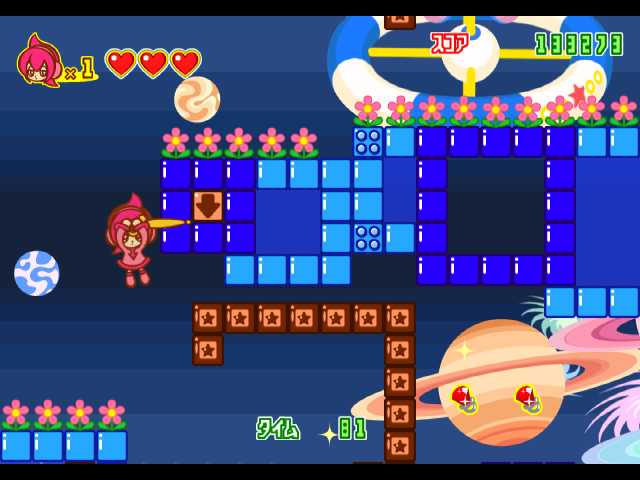 Tomohiro Nishikado left Taito to found his
own company, "Dreams" in 1996. Dreams was a sister brand to Illusion and Taito, they developed "Chase H.Q.: Secret Police" (1999), "Wangan Dream"
(1999),
"DANCINGCATs" (2000),
"Day of Love" (2000), "Puzzle Bobble Millennium" (2000), "Interact Play" (2000), "Interact Play VR" (2001), "Ecstasy Resort" (2001), "Super Puzzle Bobble 2"
(2002), "Battle Raper" (2002), "Spica Adventure" (2003), "Des Blood VR" (2003), "Sexy Beach 2" (2003), "Puzzle Bobble Pocket" (2004),
"Space Invaders Revolution" (2005), "Space Invaders Evolution" (2005), "Rainbow Islands Revolution"
(2005), "Battle Raper II" (2005), "Ultra Puzzle Bobble Pocket" (2006),
"New Zealand Story DS" (2007), "Bubble Bobble Double Shot" (2007), "Balloon Pop" (2007), "Legacy of Ys:
Books I & II" (2008), "Meja-Maji March" (2009), "Balloon Pop Festival" (2010)
and published or contributed to many others. Tomohiro Nishikado left Taito to found his
own company, "Dreams" in 1996. Dreams was a sister brand to Illusion and Taito, they developed "Chase H.Q.: Secret Police" (1999), "Wangan Dream"
(1999),
"DANCINGCATs" (2000),
"Day of Love" (2000), "Puzzle Bobble Millennium" (2000), "Interact Play" (2000), "Interact Play VR" (2001), "Ecstasy Resort" (2001), "Super Puzzle Bobble 2"
(2002), "Battle Raper" (2002), "Spica Adventure" (2003), "Des Blood VR" (2003), "Sexy Beach 2" (2003), "Puzzle Bobble Pocket" (2004),
"Space Invaders Revolution" (2005), "Space Invaders Evolution" (2005), "Rainbow Islands Revolution"
(2005), "Battle Raper II" (2005), "Ultra Puzzle Bobble Pocket" (2006),
"New Zealand Story DS" (2007), "Bubble Bobble Double Shot" (2007), "Balloon Pop" (2007), "Legacy of Ys:
Books I & II" (2008), "Meja-Maji March" (2009), "Balloon Pop Festival" (2010)
and published or contributed to many others.
|
 |
|
1999-2010
By 2000 Taito merged with Kyocera Multimedia
Corporation to venture into the cell-phone market, they produced lots of keitai games and software
(including karaoke applications, search engines, fortune telling services along with ringtone and
wallpaper collections).
In December of 2002 Taito released their final karaoke and game system, the Taito Mediabox X-01. Including
a DVD drive and 56k modem, it sold at an open price and even offered a deluxe model with a built-in
cassette deck. The Mediabox would still run on the Taito X-DataNet service which would remain supported
until 2012. After Square Enix acquired nearly all shares of it, Taito became a subsidiary wholly owned by Square Enix in 2006.
Since 2010 all of Taito's console games are published by Square Enix because of this.
Between 2000 to 2010 Taito developed "Battle Gear 2", "Chaos Break", "Chase H.Q.: Secret Police", "Cosmo Warrior Zero", "Densha de Go! 3", "Densha de Go! Nagoya Railroad", "Densha de Go! Ryojouhen", "Ganbare Untenshi!!", "Jet de Go!", "Kisha de Go!", "Monkey Puncher", "Qix Adventure", "Rainbow Islands: Putty's Party", "RC de Go!", "Shanghai: Shoryu Sairin", "Soutenryu",
"Stunt Typhoon", "Cleopatra Fortune Plus", "Densha de Go! Shinkansen Sanyou Shinkansen-hen", "Greatest Champ", "Hajime no Ippo: The Fighting", "Hard Puncher: Hajime no Ippo 2",
"Qix Neo", "Stunt Typhoon Plus", "Azumanga Daioh Puzzle Bobble", "Battle Gear 3", "Battle Qix", "Darius R", "Elevator Action Old & New", "Jet de GO! 2", "Magic Pengel",
"Raizin Ping Pong", "Space Raiders", "Super Puzzle Bobble 2", "Tokyo Road Race", "Battle Gear 3 Tuned", "Battle Gear 3 Limited Edition", "Bubble Bobble: Old & New", "Bujingai",
"Densha de Go! Professional 2", "Space Invaders Anniversary", "Train Simulator + Densha de Go! Tokyo Kyuuko-hen", "Chaos Breaker", "Densha de Go! Final", "Puzzle Bobble Deluxe",
"Battle Gear 4", "Densha de Go! Pocket Yamanote sen-sen", "Exit", "Graffiti Kingdom", "Jet de Go! Pocket", "King of Jurassic", "Psychic Force Complete",
"Puzzle Bobble DS", "Ultra Puzzle Bobble", "Space Invaders Pocket", "Space Invaders Revolution", "Spica Adventure", "Zoids Card Colosseum", "Zoids Infinity EX",
"Battle Gear 4 Tuned", "Chase H.Q. 2", "Densha de Go! Pocket Chuo-sen-hen", "Densha de Go! Pocket Osaka-kanojo-sen-hen", "Densha de Go! Pocket Tokaido-sen-hen",
"Dino King Battle Card Game", "Exit 2", "Ghost Castle", "LostMagic", "Minna no Oshigoto", "Monster Bomber", "Over G Fighters", "Rainbow Islands Revolution",
"Sekai Bikkuri Tankentai", "Zoids Infinity EX Plus", "Rozen Maiden: Duellwalzer", "Aquarian Age Alternative", "Densha de Go! Shinkansen EX Sanyō Shinkansen-hen", "Furu Furu Park",
"The New Zealand Story Revolution", "Puzzle Bobble Bash!", "Rainbow Islands Evolution", "Space Invaders Pinball", "Turn It Around!", "Arkanoid DS",
"D1GP Arcade", "Eternal Wheel", "Space Invaders The Beat Attacker", "Space Invaders Extreme", "My Pet Shop", "Arkanoid Plus!", "Bubble Bobble Plus",
"Cyber Diver", "Dariusburst", "Elevator Action Death Parade", "Hopping Road", "Music GunGun!", "Panic Museum", "Puzzle Bobble Plus!", "Rainbow Islands: Towering Adventure",
"Senior Nippon!", "Space Invaders Extreme 2", "Space Invaders Get Even", "Space Puzzle Bobble", "Takt of Magic", "Top Speed", "Dariusburst Another Chronicle", "Densha de Go! Speial Version - Revived!",
"Gaia Attack 4", "Hopping Road Kids", "Qix++", "RayStorm HD", "Sonic Blast Heroes", "Space Invaders Infinity Gene", "Speed Rider" and "Tablecloth Hour".
 |
|
Taito made a lot of mobile games and software distributed over i-mode, EZweb, Yahoo!Keitai, Club Air-Edge and later more services.
Documented applications and ports (in no particular order) included: "Battle Gear", "BOYS CAFE", "Densha de GO!" (including wallpapers and other media), "Invader de GO!",
"Japanese Wild Bird Journey" (Bird watching game), "Moba Inu Life", "Saburo Loves Fishing", "Taito G@me Park" (Arcade ports), "Taito iBox" (Games, ringtones, quizzes),
"Taito MusicDoor", "Taito Station", "Ultimate Mahjong 100", "Ys/Falcom i" (Collection of Falcom games, Ys series and Lord Monarch), "Taito Game Expo",
"Ys§Ys" (Ys I, II, III, IV, V & VI ports), "Bubble Bobble", "Trance Pinball", "Cooking Mama", "Darius", "EXIT", "Arkanoid", "Arkanoid -LINK-", "Arkanoid: Doh It Again", "Battle Arkanoid",
"Bokura No Fishing Marine", "Bokura No Fishing River", "Burgerfesta", "Chase H.Q. 3D", "Chokkan Arkanoid", "Cleopatra Fortune", "Crazy Balloon", "Cubic Invaders", "Elevator Action DX",
"Elevator Action Episode ZERO", "Elevator Action Real", "Elevator Action Real 2", "Fishing-Lover Saburou", "FLIPULL", "Front Line", "Hoshifuru Yozora+", "Invader Chain", "Invader Groove",
"Kiki Kaikai", "Lord Monarch", "Mahjong After School", "Ninja Warriors", "Pac-Man x Space Invaders", "Palamedes", "Pichon-kun's Urrun Golf", "Puzznic", "Pythagoras", "QIX/QIX Ver.2", "Quiz Quest",
"Secret of Evangelion", "Shakugan no Shana: Flame-Haired Burning-Eyed Hunter", "Shin Ys 3D", "Shin Ys 3D Gaiden", "Sichuan", "Solitare Freecell", "Space Invaders -LINK-", "SPACE INVADERS INFINITY GENE",
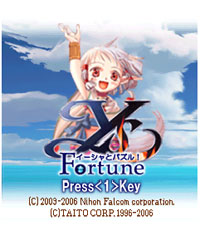
"Space Invaders x Pac-Man", "Spica Adventure", "Taito Harikiri Millionaire", "The Fairyland Story", "Ultimate Harikiri Smash", "Ultimate Harikiri Stadium", "Ys Elena Solitare", "Ys Fortune",
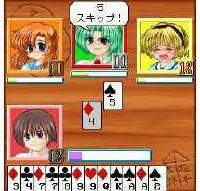
"Ys Heroines", "Ys Nexus", "Ys Origin Solitaire", "YS Pinball", "Ys Solitaire & Freecell", "YS VI", "YS: The Oath in Felghana", "Higurashi iApp", "Higurashi When they Cry EZ Mobile", "Higurashi Ikkasama Daifugo",
"Renapan", "Yawaraka Sensha VS Space Invaders", "Guruuta Full", "Infiltrate! B-PASS 24 hours", "Gurumelo Waiting Oto", "Aquarian Age Alternative Mobile", "Love☆Wish & Decision", "Leave it to Akko! Brain Shock", "Dino King Battle Mobile",
"Marriage Fortune Telling", "Elemental Gelade", "MotorGarage", "Arithmetic Astrology", "Etoile Maiden Rose Divination", "Bubblen Golf", "Idol@TV", "Impala!", "Umineko x Higurashi When They Cry", "Trails in the Sky", "Pop☆Tower",
"Period Zero", "Monster Caravan", "DariusBurst", "Psychic Force", "Cooking Mama", "Rayforce", "Raycrisis", "Raystorm", "Mikado Defenders", "New Puzzle Bobble", "Cameltry Labyrinth of Enigma", "WaterWays" (Netherlands-Japan GameJam 2008 entry) and "Groove Coaster".
Some of the most popular games were released overseas and provided for Club Nokia, Vodafone Live!, AT&T Wireless, and Sprint services too.
External Links
|
 |
|
|
 |
|
On July of 2000 former Taito employees, who worked on the PS1 versions of "G-Darius", "Raystorm", "Super Football Champ" and "Densha De GO!", founded the company "G.rev". The first game they developed was the PS1 port of "Mawasunda!!", an arcade party game Taito released a year prior on the G-NET. They would keep close ties with the companies they formerly worked for, collaborating with (former) ZUNTATA members like Yasuhisa Watanabe and Norihiro Furukawa for their independent game soundtracks, or by working for Taito and Treasure to help with the funding of said independent titles. Masato Maegawa, Treasure's CEO, was friends with Maruyama, which lead to G.Rev being entrusted with both Ikaruga and Gradius V.
G.rev went on to also develop "Doki Doki Idol Star Seeker", "Border Down", "Senko no Ronde", "Under Defeat", "Senko no
Ronde SP", "Wartech: Senko no Ronde", "Mamorukun Curse!", "Senko no Ronde Dis-United Order", "Senko no
Ronde DUO", "Strania", "Kokuga", "GameCenter CX: 3-Chōme no Arino", "Dariusburst Chronicle Saviours",
"Senko no Ronde 2", "Yurukill: The Calumniation Games", "Mamorukun ReCurse!"
and worked alongside Taito and Treasure for other titles; Ikaruga being the best known collaboration.
|
 |
More to be added, someday...
|


